
ICT ADOPTATION IN HEALTHCARE SERVICES
Importance of ICT in Healthcare Service Delivery:
A Sri Lankan Perspective
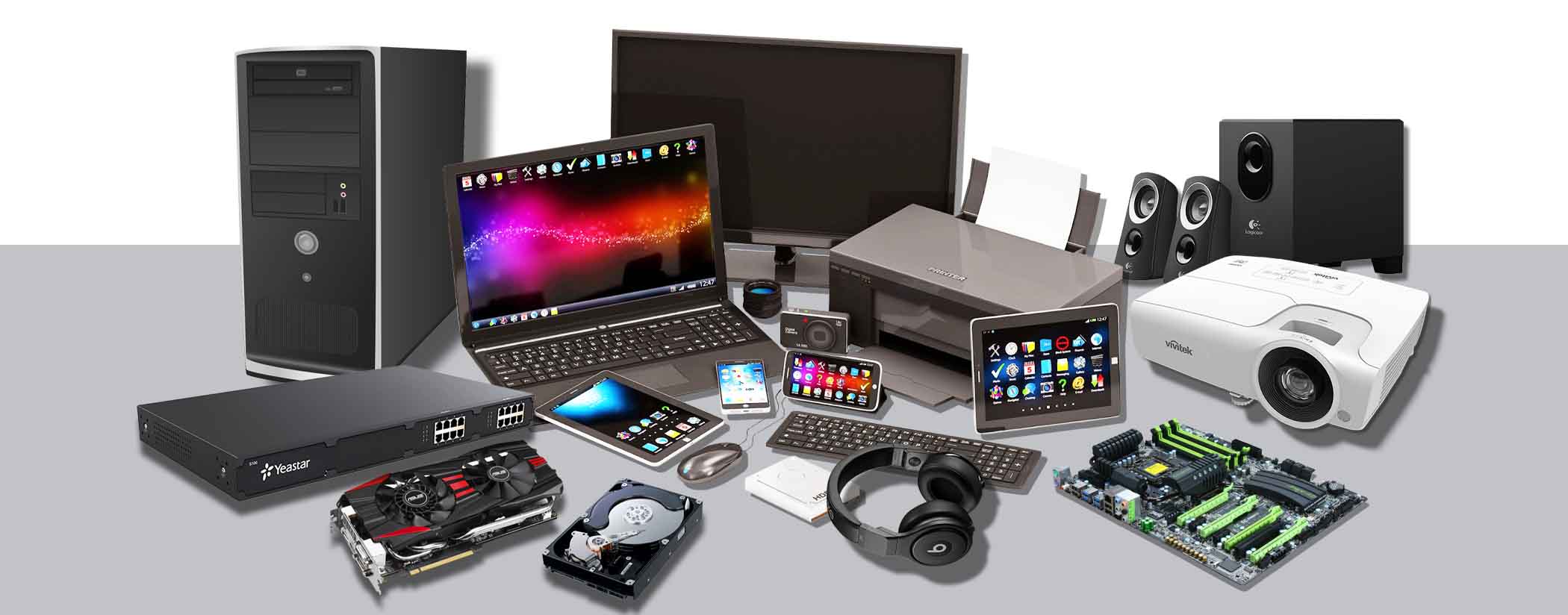
Information and Communications Technology (ICT) is a promising tool of developing and using technology to process information, and aid in communications. Nowadays, ICT is used nearly everywhere around us in learning, in teaching, in businesses, in manufacturing, in selling, in healthcare services etc. It makes lives easier, by improving quality and speed in delivery of services, including healthcare services.
ICT in healthcare services is used mainly to deliver healthcare services at remote places where conventional service delivery is impossible, and improves health and living standards of the much poor who are exposed to many diseases in impoverished countries and regions like Sri Lanka. ICT has already made a huge impact in healthcare service delivery by:
- Improving dissemination of public health information, and facilitating public conversations on major challenges to the health sector.
- Enabling distant and remote consultations, diagnosis, and treatment through telemedicine (application of clinical medicine using communication devices and internet or alternatives).
- Facilitating teamwork and sharing among healthcare employees.
- Assisting in useful and effective health research.
- Strengthening ability to monitor public health challenges and threats, and responding to them swiftly.
- Improving efficiency of healthcare administrative processes.
ICT has thus been proven to be a very important and effective tool in healthcare service delivery by improving health and well-being of general public that includes, but not limited to, improving public health and medical programmes designed to provide optional, emergency, and long-term curative and preventive healthcare services. Reliable and verified information, and effective communication are the backbones and vital elements in effective public healthcare practices. ICT made possible a fact that was unrealistic during pre-ICT era, by connecting doctors from all around the world to communicate with each other and discuss any health issue seamlessly without leaving their homes or offices. It also made possible the personal medical records are more accessible to the general public, by which helps people with improving their own health.
Health Information Technology (or eHealth) is a broad term that describes the technology and infrastructure used to record, analyse, and share patient health data. Various technologies include health record systems, including personal, paper, and electronic; personal health tools including smart devices and applications; and finally, communities to share and discuss information.
The purpose of eHealth is to provide better care for patients and help achieve healthcare equity, and it supports recording of patient data to improve healthcare delivery and allow for analysis of this information for both healthcare practitioners and ministry of health or government agencies. This data is used for the implementation of policies in order to better treat and prevent the spread of diseases.
Usefulness of ICT in health sector can be broadly categorised into following three important sections:
- Improving functions – patient care, medical records, medical administration, medical supplies etc.
- Enhancing service delivery – better diagnosis, training workers, supporting primary health care etc.
- Boosting communication – improved communication among workers, getting feedback etc.
ICT helps in improving healthcare delivery in a number of ways, and Telemedicine is one of them that helps countries and territories that deal with shortages of doctors through better distribution of resources and assists in sharing experiences, and acts as a pivotal tool in continued professional development. Electronic networks are highly effective, valid, and workable means of providing learning and dialogue, highlighting issues and creating virtual conferences among those who cannot meet or attend in person.
The use of Information communication technology (ICT) in socio-economic development is evident in various sectors of Western nations. However, healthcare is one of two key concerns in any developing country. While the health and education sectors have received substantial breakthroughs because of enabling ICT policies, intrinsic problem within the healthcare sector, specifically in some countries, have affected organisations and people. An appropriate assessment of the impact of an ICT policy in the health sector is likely to assist in the improvement of ICT policy and its implementation thereof.
In developing countries, many health workers involved in primary healthcare service delivery work in isolation, often work alone, and have little or no access to latest information and experience less chances to exchange experiences with their colleagues.
Widespread adoption of information and communication technologies (ICT) is a key strategy to meet the challenges facing health systems internationally of increasing demands, rising costs, limited resources and workforce shortages. Despite the rapid increase in ICT investment, uptake and acceptance has been slow and the benefits fewer than expected. Absent from the research literature has been a multi-site investigation of how ICT can support and drive innovative work practice.
In summary, telemedicine provides benefits, like urban and rural linkages and connecting health staff to centralized health expertise. Phones and e-mails that are incorporated into medical practices can make a significant difference. Also, multiple ICT routes are used for e-learning in a mixed toolbox approach, eg. Using internet, SMS, tablets, radio, printouts etc.
The aim of Information and Communication Technologies (ICT) for Health (also known as eHealth) is to improve significantly the quality, access and efficacy of healthcare for all citizens. ICT for Health describes the application of information and communication technologies across the whole range of functions that affect the health sector. Every nation is seeking to improve the quality of its health care and at the same time to control escalating costs. In 2001, the size of IT-enabled healthcare services is estimated to be about $ 3.1 billion, of which about 80 per cent are in developed countries (Poste, 2000). On-line consultations by patients and doctors through websites and email, distance referrals, emergency evacuations, and advance transmission of images and data of patients from ambulances can reduce lead times of intervention in emergency wards of hospitals A critical mass of professional and community users of ICT in health has not yet been reached in developing countries like Sri Lanka. Many of the approaches being used are still at a relatively new stage of implementation, with insufficient studies to establish their relevance, applicability or cost effectiveness (Martinez, et al, 2001). This makes it difficult for governments of developing countries like Sri Lanka to determine their investment priorities (Chandrasekhar and Ghosh, 2001). However, there are a number of pilot projects that have demonstrated improvements such as a 50% reduction in mortality or 25-50% increases in productivity within the healthcare system (Greenberg, 2005).
Electronic health is one of the most popular applications of information and communication technologies and it has contributed immensely to health delivery through the provision of quality health service and ubiquitous access at a lower cost. Even though this mode of health service is increasingly becoming known or used in developing nations, these countries are faced with a myriad of challenges when implementing and deploying e-health services on both small and large scale. It is estimated that the Africa population alone carries the highest percentage of the world’s global diseases despite its certain level of e-health adoption. This lesson should be an eye opener to policy makers in Sri Lanka.
People take in new information, ideas, and approaches in terms of their own local context and social, economic and cultural processes. They adopt them into their daily realities in ways that help them better deal with the local situation. They have to understand the culture of another country and find out whether the treatment they want to give the patients is right for them, taking into account their religion, for example. ICT help them with that. They provide opportunities to encourage dialogue and social mobilization. Approaches that are being used for any of these purposes include: developing internet information portals, using mass media to broadcast widely, developing interactive programming on broadcast media and making more effective use of existing communication systems.
Communication systems are already quite developed, still, though, they need an increase in effectiveness. We can observe the quick development of communication systems through, eg. GIS-Geographical Information Systems. These devices have a very important use; they help to predict and identify the spread of any harmful diseases. In many countries, it already had helped a lot. In Bangladesh, GIS data had been used to warn the health authorities from the spread of cholera in coastal cities.
Communication systems may be developing, but there are three main barriers that restrain the successful application of ICT in the health sector in developing countries: connectivity, capacity and content. With connectivity, the issues are about lack of access to electricity, high costs, lack of telecom policy or solar power options. With capacity, the problems are with ensuring that information are culturally appropriate. While content problems include lack of local content creation and the language used.
Although, many poor and developing countries like Sri Lanka already use ICT in the health sectors, they still have to be developed, so there is two-way communication and the messages and information are clear. A good example is Namibia, where there were statistics made how Namibian doctors used ICT to deliver health services to their patients. A questionnaire was administrated to 21 health service providers in two regions of the country, from one of which was rural, the other urban. All said that ICT are very important (100%). 91% said ICT helps them interacting with other health service providers. The most common ICT is a telephone (36%), the next one is a PC (23%). The most commonly used channels of communication with patients are telephones followed by television. Namibia has big problems with budgets and lack of basic infrastructures, like electricity or telephone lines. “There is a need to promote ICT use for health service delivery and also to stimulate patients to use ICT to access health services and relevant information.” Same is true in Sri Lankan context too.
India has a current population of 1.25 billion. By 2050, it is expected to reach 1.6 billion. So, the public health planners of the country have a big challenge to cater to. The performance of the health sector is suboptimal because of an increased burden of factors like political instability, underdevelopment, weak institutions, scarcity of resources, inadequately developed social sectors and evident social inequalities. However, with an increase in population, healthcare service resources will not increase in the same proportion. There are big geographical disparities in health and wellbeing of the population along with demographic and epidemiological transitions that take place. This demands non-stop spatio-temporal adjustments in plans and readjustment in allocation of healthcare resources. Though the government has made huge budget expenditures under ambitious schemes like NRHM, accessibility to low-cost healthcare is poor. Technology has a huge potential to grow capacity in this sector due to low-cost innovation, low-priced mobile phones and more ‘inclusive’ solutions that fill crucial gaps in health information and access. Sri Lankan public health sector can readily adopt such novel ideas and approaches of India.
To tackle these challenges, the process of health planning needs to evolve by the use of ICT in healthcare delivery and distribution and public health decision making at every level. This will ensure delivery of right health services to right people at the right place as well as on right time. ICT has the capacity to influence all aspects of the health sector. For instance, in public health, management of information and communication processes are very crucial and are assisted or limited by the availability of information. Sri Lanka has been steadily progressing in this area with a lot of recent achievements.
Of late, the use of ICT has seen a remarkable growth. In India, e-governance has been institutionalised, the use of ICT has become a norm for several government departments. ICT helps patients become more involved in their own care. This becomes more significant in managing chronic conditions such as asthma, diabetes, heart disease etc. People in remote areas sacrifice a day’s work and wages in order to get to a doctor for minor ailments. In such cases, primary healthcare costs can be reduced by be facilitating innovation in telemedicine. Telemedicine can also streamline processes and decrease administrative overheads, thereby leading to creation of new, high-tech markets and jobs. It is also being used for education, research and data management. Similar developments can help countries like Sri Lanka too.
Conclusion:
Information and communications technologies (ICT) can play a critical role in improving health care for individuals and communities. By providing new and more efficient ways of accessing, communicating, and storing information, ICT can help bridge the information divides that have emerged in the health sector in developing and new industrial countries—between health professionals and the communities they serve and between the producers of health research and the practitioners who need it. Through the development of databases and other applications, ICT also provide the capacity to improve health system efficiencies and prevent medical errors.
Ministry of Health in Sri Lanka has been training medical doctors through postgraduate institute of Medicine of University of Colombo in biomedical informatics from 2008 and about thirteen batches of doctors numbering a few hundred have obtained their masters in biomedical informatics. Further, the ministry has also started training such master degree holders to become doctors of medicine in biomedical informatics to further strengthen eHealth in Sri Lanka.
References:
- https://openmrs.org /2017/07/the-importance-of-health-information-technology-in-developing-areas/
- https://www. tandfonline.com/doi/full/10.1080/21665095.2019.1680302
- https://bmchealthservres.biomedcentral. com/articles/10.1186/1472-6963-9-201
- https://www.researchgate.net/publication/274633485_ICT_in_Health_care_delivery_system_A_Framework_for_developing_nations
- https://www.researchgate.net/publication/333079862_Current_State_of_ICT_in_Healthcare_Delivery_in_Developing_Countries
- https://www.expresshealthcare.in/healthcare-it/role-of-ict-in-healthcare/380759/
- http://www.healthconnect-intl.org/ictforh.html
- http://www.teach-ict.com/gcse/theory/healthsafety/miniweb/index.htm
- http://www.ictri.port.ac.uk/overview.htm
- http://www.publictechnology.net/content/1480
- http://jtt.rsmjournals.com/cgi/content/abstract/14/6/285
- Improving health, connecting people; the role of ICT s in the health sector of Developing Countries, framework paper, 31st May 2006.
- Improving health, connecting people; the role of ICT s in the health sector of Developing Countries, framework paper, 31st May 2006.
- http://www.webopedia.com/TERM/I/ICT.html
- http://jtt.rsmjournals.com/cgi/content/abstract/14/6/285
- http://www.ictri.port.ac.uk/overview.htm
- http://www.publictechnology.net/modules.php?op=modload&name=News&file=article&sid=1480
- http://www.teach-ict.com/gcse/theory/healthsafety/miniweb/pg5.htm
- http://www.teach-ict.com/gcse/theory/healthsafety/miniweb/pg7.htm